Plan both directions
A good window covers the run out, the time on structure, and the ride home, not just the first hour offshore.
A weather window is not just a calm-looking forecast. It is the overlap between seas, wind, daylight, tide or current exposure, route length, crew comfort, and the return plan.
Built for anglers who need a repeatable way to talk about offshore timing without turning a forecast into a guarantee.
A good window covers the run out, the time on structure, and the ride home, not just the first hour offshore.
Wind, seas, fronts, sea-surface temperature context, current exposure, and route angle can each change the decision.
Write the cutoff before the crew loads the boat so the plan can change without pressure.
This list is built for newsletters, club posts, captain pre-trip notes, and personal trip planning.
Compare the forecast direction to the shoreline, inlet, route angle, and likely drift or anchor setup.
Review wave height, period, swell direction, and whether the boat and crew can handle the ride out and back.
Check whether the window is opening, closing, or being squeezed by a front, afternoon storms, or fast-moving cells.
Identify inlets, bars, bridges, passes, or shoals that can become difficult when wind and current oppose.
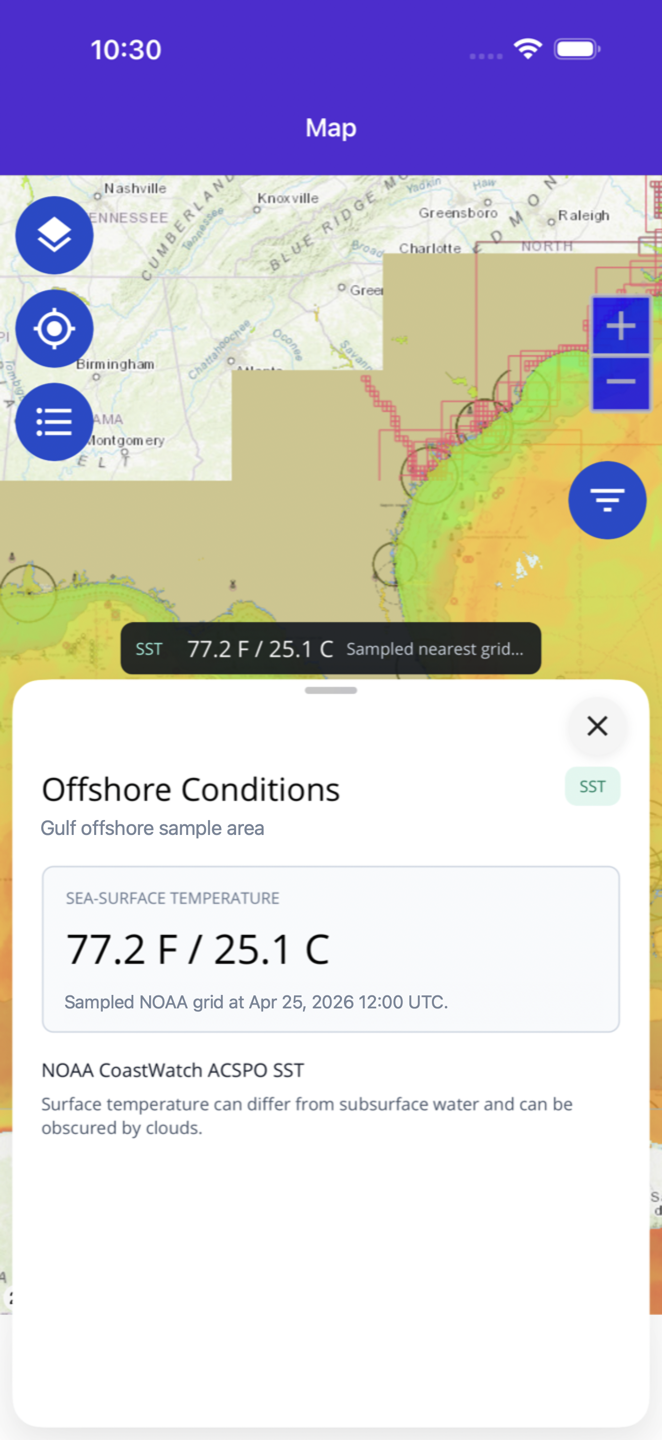
Use sea-surface temperature as one planning signal, while remembering clouds, source age, and fast fronts can change the read.
Set the latest turn-home time and the weather change that triggers an early exit.
Save a shorter run, inshore option, or dockside plan if the offshore window narrows.
Match the plan to crew comfort, radio/phone coverage, emergency gear, and the float plan.
Use these fields to keep the weather decision concrete.
Expected time the window opens, peak usable period, and the latest safe return timing.
Inlet, pass, shoal, or offshore leg most likely to become uncomfortable.
SST edge, color, current, or bait context worth comparing with structure.
Specific wind, sea, storm, crew, or fuel condition that cancels the trip.
Shorter run, inside option, dockside maintenance, or reschedule criteria.
What the forecast got right or wrong and which source was most useful.
Weather-window content is broadly useful because it helps anglers explain judgment, not just quote a forecast.
Link it in marina newsletters before busy offshore weekends.
Use it to explain why a trip time changed or why a conservative backup plan matters.
Use the checklist as the framework for a before-and-after weather-window analysis.